


Johnson aggressively charged Masemola says state advocate
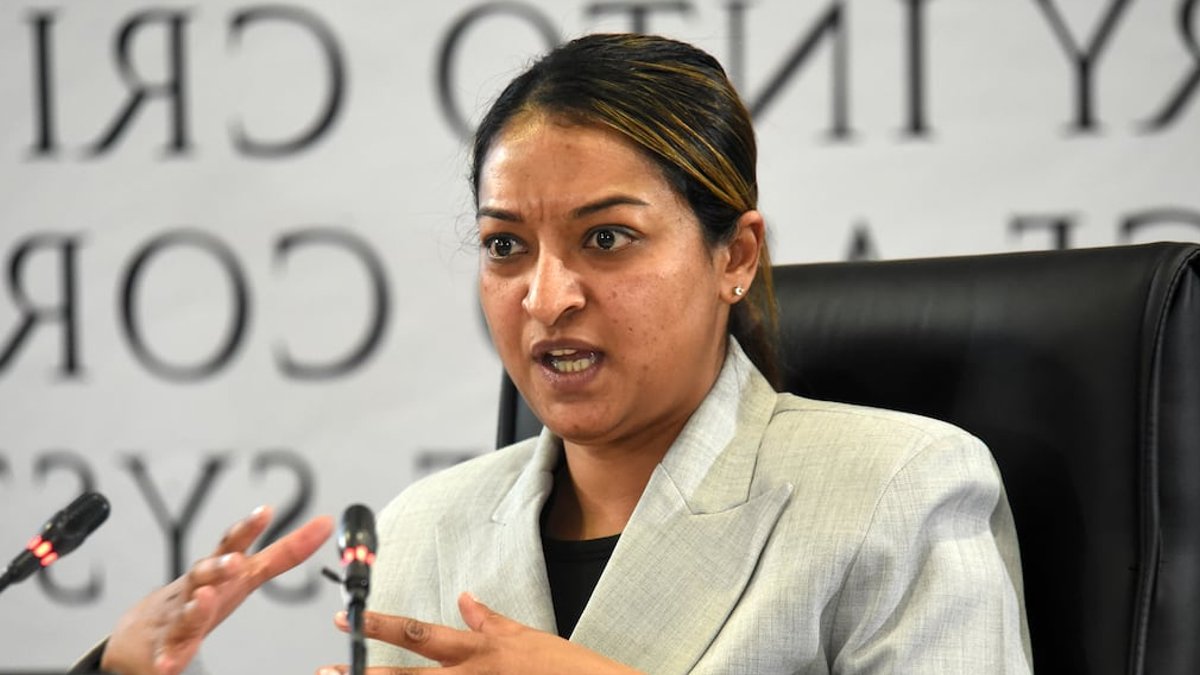
Former head of the Investigating Directorate Against Corruption, Andrea Johnson, is accused of engineering a scheme to bring police national commissioner Gen Fannie Masemola to trial, according to testimony presented to the Madlanga commission.
Commission testimony alleges a deliberate “set‑up”
State advocate Drushantha Ramsamy told the commission that in a January 2022 meeting Johnson instructed her team to keep Masemola out of the loop on investigations into the KwaZulu‑Natal political killings unit and a separate probe into police crime intelligence. Ramsamy said Johnson warned that the commissioner would soon appear before the portfolio committee on policing and that “we should ‘let him lie’ at the portfolio committee.”
The advocate explained that by withholding information, the directorate hoped Masemola would be caught contradicting himself when questioned by MPs, including DA member Ian Cameron. “It looked and became evident that there was a line of march and that line of march was to get generals Khumalo and Masemola in an accused box,” Ramsamy said, adding that the plan was to charge Masemola if he lied.
Commissioner Sandile Khumalo asked whether the approach amounted to a “set‑up” for Masemola. Ramsamy answered, “Correct,” confirming that the strategy was intentional.
Related: Senate Panel Votes to Cite Fauci for Contempt
Evidence of internal collusion
The testimony also highlighted the role of crime intelligence chief Feroz Khan, who allegedly supplied the directorate with information for the case against his own colleagues. Khan faced internal disciplinary proceedings for sharing that data, which was used to build a criminal case targeting senior officials.
On 23 January 2025, officials Dylan Perumal and Brian Padayachee reported that Khan told them Gen Khumalo did not have top‑secret clearance. Despite that, Masemola called Khan and instructed him to support and follow up on the vetting process for Lt‑Gen Dumisani Khumalo. Perumal interpreted the call as “compelling evidence of wrongdoing on the part of Masemola.”
Ramsamy also brought up a separate irregularity involving a R228 million police tender awarded to Vusimuzi “Cat” Matlala. According to the advocate, it began investigating the matter without an affidavit, bypassing standard procedures. She noted that a Section 28(1) order dated 16 May 2025 could have authorized the seizure of Matlala’s devices on 30 May 2025, but suggested that Johnson and Perumal were aware the investigation was unlawful from the start.
The Matlala case, described as one of the biggest corruption probes handled by the investigation, highlights the broader pattern alleged by Ramsamy—an aggressive, sometimes questionable, pursuit of high‑profile officials.
These revelations emerge amid ongoing scrutiny of the criminal justice system’s independence, with the Madlanga commission tasked with uncovering any infiltration by criminal elements.
Related: Vietnam eyes growth in blue economy investments
For those directly involved, the accusations could mean a significant reshaping of oversight mechanisms. If the alleged tactics are confirmed, senior officials might face tighter controls on how investigations are coordinated, especially when political sensitivities intersect with law‑enforcement duties.
Potential implications for oversight
Legal experts note that the commission’s findings could prompt reforms in how the directorate interacts with police leadership. The alleged “let him lie” instruction, if verified, would represent a breach of procedural fairness, potentially leading to disciplinary action against Johnson and others implicated.
Meanwhile, the commission will continue to examine the broader claims of criminal infiltration, assessing whether the directorate’s actions were isolated incidents or part of a larger pattern of misconduct.
The commission continues its work.

Senate Panel Votes to Cite Fauci for Contempt


